Healthy Snack Ideas for Adults and Kids
The best everyday snacks are fruit and vegetables, ideally paired with some protein or whole grains to keep you full: yoghurt with fruit, veg sticks with hummus, a boiled egg, plain popcorn or a small handful of unsalted nuts. For packaged snacks, check the label and choose ones lower in sugar, salt and saturated fat.
- Published
- 2 min read
- By Healthy Primix
- How we write and review content
Key takeaways
- Fruit and vegetables are the best snack choice: vitamins, fibre and part of your 5 A Day.
- Pair them with protein or whole grains (yoghurt, hummus, egg, oatcakes) to stay full for longer.
- Nuts are a healthy snack but high in energy. Keep portions small, and never give whole nuts to children under 5.
- On packaged snacks, choose more green and amber traffic-light labels and fewer reds.
On this page
What makes a snack "healthy"?
A good snack fills the gap between meals without adding lots of sugar, salt or saturated fat. Aim for snacks built from:
- fruit and vegetables, the best choice for vitamins, minerals and fibre
- protein: yoghurt, eggs, hummus, beans, lower-fat cheese
- whole grains: oatcakes, wholegrain crackers, plain popcorn
The WHO's healthy-diet advice also recommends plenty of fruit, vegetables, legumes, nuts and whole grains, and limiting free sugars and salt.
15 quick snack ideas
Fruit and veg
- An apple or pear with a small handful of unsalted nuts
- Carrot, pepper, cucumber and celery sticks with low-fat hummus
- Cherry tomatoes and sugar snap peas
- Satsuma segments, berries or halved grapes (quarter grapes lengthways for young children)
- Banana slices on wholegrain toast
Protein-based
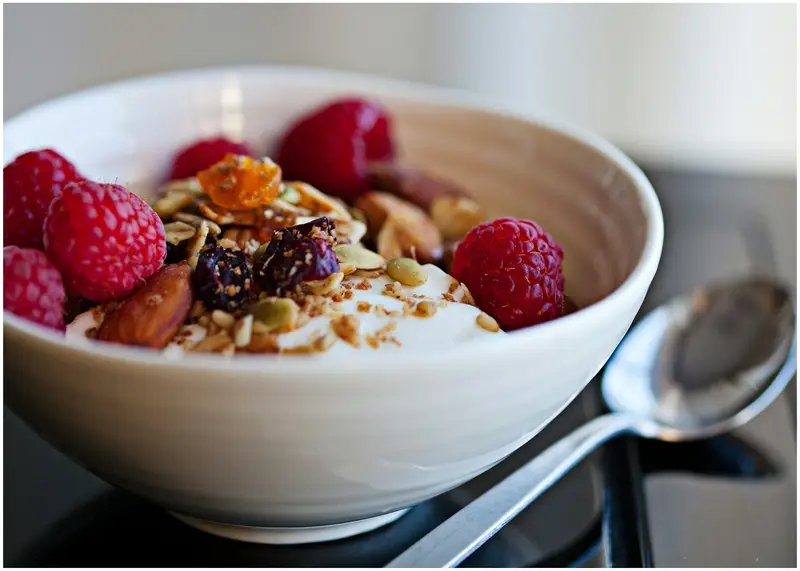
- Plain yoghurt with sliced fruit
- A boiled egg
- Rice cakes with lower-fat cream cheese and cucumber
- Mashed avocado with a boiled egg
- Roasted chickpeas, homemade with a little oil and spices
Whole grains
- Homemade plain popcorn, without sugar or lots of salt
- Oatcakes with lower-fat cheese and tomatoes
- Toasted wholemeal pitta with a yoghurt dip
- A crumpet with lower-fat spread
- Overnight oats with fruit
Choosing packaged snacks
If you buy snacks:
- Check front-of-pack traffic lights: choose more greens and ambers, fewer reds.
- Read the ingredients: sugars appear under many names, such as syrup, glucose, fructose or honey. See how much sugar you should eat.
- Watch portion sizes: "sharing" bags often contain several portions.
- For children, NHS Healthier Families suggests no more than 2 packaged snacks a day.
Tips that make healthy snacking easier
- Prepare ahead: keep chopped fruit and veg ready in the fridge.
- Make it visible: a fruit bowl on the table beats biscuits in the cupboard.
- Plan snacks instead of grazing all day.
- Drink water first. Thirst is sometimes mistaken for hunger.
Safety notes for children
- Don't give whole nuts to children under 5, because of the choking risk. Ground or smooth nut butters are fine unless there's an allergy.
- Cut small round foods like grapes and cherry tomatoes lengthways for young children.
Watch our video
The Healthy Primix video below shows 14 quick snack ideas you can make at home.
Watch: the short version
Nutrition
14 Quick and Nutritious Snack Ideas for a Healthy Lifestyle | Easy and Delicious Recipes
Watch on YouTube (opens in a new tab)Common questions
Is snacking bad for you?
Not necessarily. Planned snacks can stop you getting overly hungry between meals. What matters most is what you choose and how often. Frequent sugary snacks are the main concern for weight and teeth.
How many packaged snacks should children have?
NHS Healthier Families advises a maximum of 2 packaged snacks a day for children, with fruit and vegetables as the first choice.
Sources
- Healthier snacks (opens in a new tab) — NHS Healthier Families
- Healthy diet — fact sheet (opens in a new tab) — World Health Organization