How Much Sugar Should You Eat a Day?
The WHO recommends keeping free sugars below 10% of daily energy, ideally below 5%, which is roughly 25 grams (about 6 teaspoons) a day. UK guidance sets a maximum of 30 grams of free sugars a day for adults. Free sugars include added sugar plus the sugar in honey, syrups and fruit juice, but not the sugar naturally in whole fruit, vegetables or milk.
- Published
- 2 min read
- By Healthy Primix
- How we write and review content
Key takeaways
- WHO: free sugars under 10% of energy, with extra benefits below 5% (about 25 g or 6 teaspoons a day).
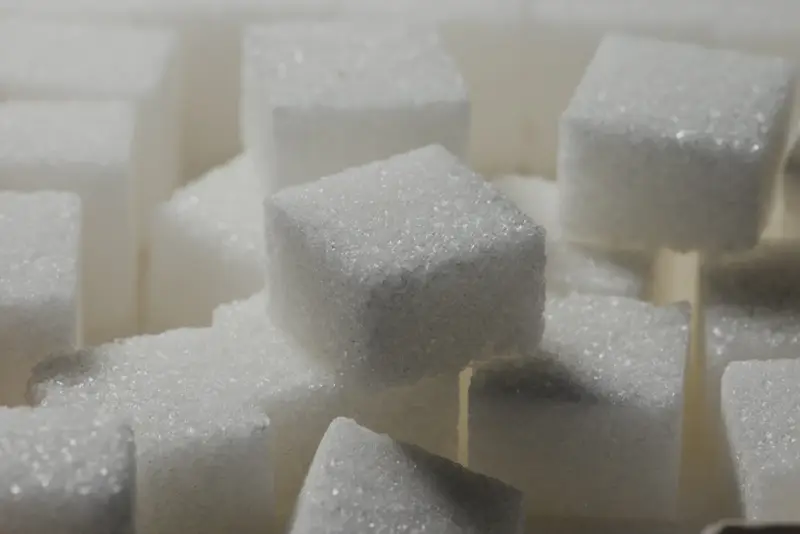
- UK maximum for adults: 30 g of free sugars a day, about 7 sugar cubes.
- Honey, syrups and fruit juice count as free sugars; whole fruit, vegetables and milk don't.
- A single can of sugary soda can contain up to 40 g of free sugars, more than a whole day's limit.
On this page
Daily limits at a glance
| Who | Maximum free sugars a day (UK guidance) | Roughly |
|---|---|---|
| Adults and children 11+ | 30 g | 7 sugar cubes |
| Children 7 to 10 | 24 g | 6 sugar cubes |
| Children 4 to 6 | 19 g | 5 sugar cubes |
| Children 2 to 3 | 14 g | 3½ sugar cubes |
| Children aged 1 | 10 g | 2½ sugar cubes |
| Babies under 1 | No added sugar at all | — |
The WHO recommends that adults and children keep free sugars below 10% of total energy intake. It says a further reduction to below 5%, roughly 25 grams (6 teaspoons) a day, would bring additional health benefits. UK guidance uses the 5% level, which is where the figures above come from.
What counts as "free sugar"
Counts:
- sugar added to food and drinks by manufacturers, cooks or you: in biscuits, cakes, chocolate, cereals, flavoured yoghurts and fizzy drinks
- sugar in honey, syrups (maple, agave, golden) and nectars
- sugar in fruit juice, vegetable juice and smoothies, even unsweetened
Doesn't count: sugars naturally inside whole fruit and vegetables, and in milk. You don't need to cut down on these.
Why it matters
The WHO says there is solid evidence that keeping free sugars below 10% of energy reduces the risk of overweight, obesity and tooth decay. Sugary drinks are an easy way to take in a lot of sugar without feeling full.
Where sugar hides
Much of the sugar we eat is "hidden" in foods we don't think of as sweet. The WHO gives these examples:
- 1 tablespoon of ketchup: about 4 g (1 teaspoon)
- 1 can of sugar-sweetened soda: up to 40 g (about 10 teaspoons)
Sauces, breakfast cereals, cereal bars, flavoured yoghurts and "health" drinks are other common sources.
Simple swaps
Drinks
- Swap sugary fizzy drinks and squash for water, sparkling water, lower-fat milk, or sugar-free and no-added-sugar drinks.
- Limit fruit juice and smoothies to 150 ml a day, ideally with a meal.
- Gradually reduce the sugar you add to tea and coffee.
Food
- Choose unsweetened wholegrain cereal and add fruit for sweetness.
- On toast, try sliced banana or reduced-sugar spreads instead of jam, honey or chocolate spread.
- Choose tinned fruit in juice rather than syrup.
- Reduce the sugar in home baking. It works for most recipes.
- Compare labels and pick lower-sugar versions.
For ideas, see our healthy snack ideas.
Watch: the short version
NutritionShort
This One Drink Is Destroying Your Liver (Not Alcohol!)
Watch on YouTube (opens in a new tab)Common questions
Is fruit bad because it contains sugar?
No. Sugars inside whole fruit and vegetables, and in milk, are not counted as free sugars, and the WHO reports no evidence of harm from them. Fruit juice and smoothies are different because blending or juicing releases the sugar, so limit them to 150 ml a day.
Is honey healthier than sugar?
For sugar limits, honey counts the same as table sugar: both are free sugars.
How do I read sugar on a food label?
Labels show 'total sugars', which includes natural sugars from milk and fruit. Check the ingredients list for added sugars such as sugar, syrup, honey, glucose, fructose or sucrose. Ingredients are listed largest first.
Sources
- WHO calls on countries to reduce sugars intake among adults and children (opens in a new tab) — World Health Organization, 2015
- Sugar: the facts (opens in a new tab) — NHS