High Blood Pressure: Know Your Numbers
High blood pressure usually causes no symptoms, so a check is the only way to know. A reading of 140/90 or higher at a clinic (135/85 or higher at home) is usually considered high. Untreated, it raises the risk of heart attack, stroke and kidney disease, but lifestyle changes and medicines work well.
- Published
- 2 min read
- By Healthy Primix
- How we write and review content
Key takeaways
- Blood pressure is written as two numbers: systolic (heart beating) over diastolic (heart resting).
- Usually high: 140/90 or more at a clinic, or 135/85 or more on a home monitor (NHS).
- The WHO estimates around 44% of adults with hypertension don't know they have it.
- Salt, excess weight, inactivity, alcohol and smoking all raise blood pressure, and all can be changed.
On this page
What the two numbers mean
A blood pressure reading such as 130/80 has two parts:
- Systolic (the first, higher number): the pressure in your arteries when your heart beats.
- Diastolic (the second number): the pressure when your heart rests between beats.
Both are measured in millimetres of mercury (mmHg).
What counts as high
| Where it's measured | Usually considered high (NHS) |
|---|---|
| By a health professional | 140/90 or higher |
| On a home monitor | 135/85 or higher |
The WHO uses the same clinic threshold: hypertension is diagnosed when readings taken on two different days are 140 systolic or more and/or 90 diastolic or more. One high reading on its own doesn't mean you have high blood pressure. Your doctor may ask you to repeat readings at home or wear a 24-hour monitor.
Treatment targets depend on your health. The WHO notes a goal below 140/90 for most people, and below 130/80 for people with heart disease, diabetes, kidney disease or high cardiovascular risk.
Why you can't rely on symptoms
High blood pressure usually causes no symptoms. The WHO estimates that about 600 million adults with hypertension (44%) are unaware they have it. Rarely, very high blood pressure causes headaches, blurred vision or chest pain, but the only way to know is to get it measured.
Why it matters
Persistently high pressure strains your blood vessels, heart and other organs. If it isn't treated, it raises the risk of:
- heart disease, heart attack and heart failure
- stroke and vascular dementia
- kidney disease
Risk factors
Ones you can change: a diet high in salt, being overweight, physical inactivity, drinking too much alcohol, smoking and long-term stress.
Ones you can't change: getting older, a family history of high blood pressure, and ethnicity. In the UK, the NHS notes higher risk for people of Black African, Black Caribbean or South Asian background.
Lifestyle changes that help
- Cut down on salt. Check labels and limit salty processed foods.
- Be active. See our guide to how much exercise adults need.
- Keep a healthy weight. Our BMI calculator is a starting point.
- Limit alcohol and stop smoking.
- Eat plenty of fruit, vegetables and whole grains.
Some people also need medicine. If you're prescribed it, take it as advised, and don't stop without talking to your doctor, even if you feel well.
When to get checked
Get your blood pressure checked if you think you might be at risk, or if you're 40 or over and haven't had a check for more than 5 years. Many pharmacies and some workplaces offer checks.
Common questions
How often should I have my blood pressure checked?
The NHS advises adults aged 40 and over to have it checked at least every 5 years, and more often if you are at higher risk or have had a high reading. Many pharmacies offer checks.
Can I measure my blood pressure at home?
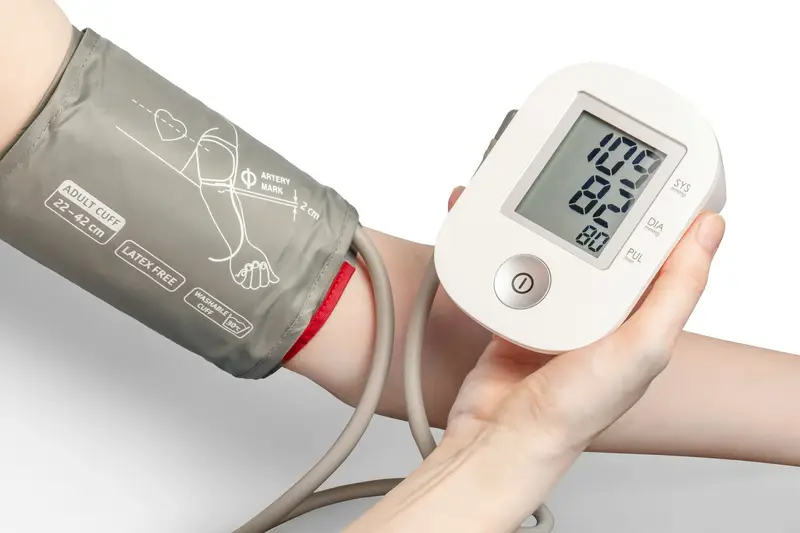
Yes. A validated automatic upper-arm monitor is useful, and home readings help confirm a diagnosis. Note the lower threshold for home readings (135/85), and share your readings with your doctor.
Sources
- High blood pressure (opens in a new tab) — NHS
- Hypertension — fact sheet (opens in a new tab) — World Health Organization